
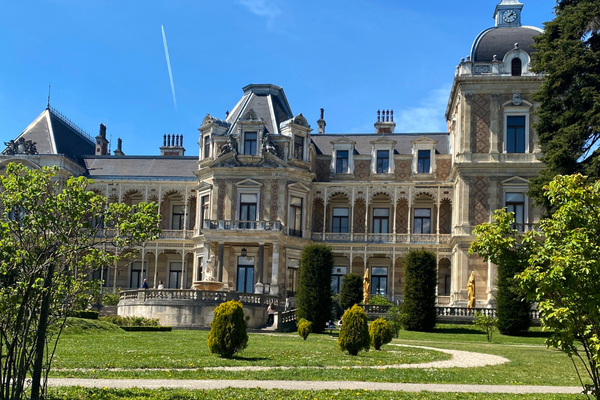
In the green heart of the Lainzer Tiergarten lies an architectural gem that continues to captivate visitors to this day: the Hermesvilla. Often referred to as the “castle of dreams”, it unites imperial love stories, magnificent architecture and Viennese culture in a unique way – a place where history and nature come together in a particularly atmospheric way.
A gift of love for Empress Elisabeth
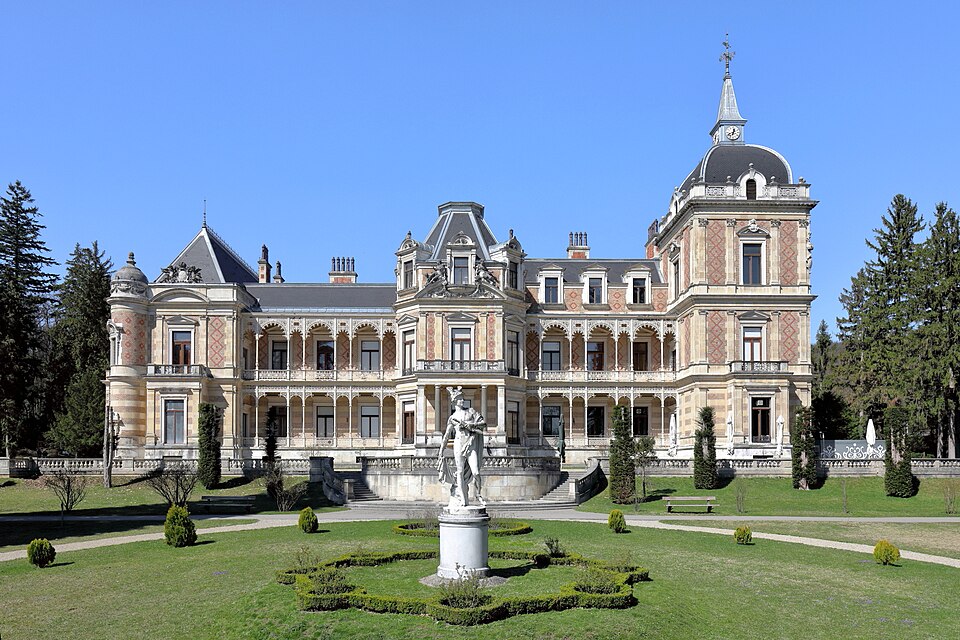
The Hermesvilla, originally called Villa Waldruh, was built between 1882 and 1886 by order of Franz Joseph I – as a personal gift to his wife Elisabeth, better known as Sisi. The emperor hoped that this retreat would allow his much-traveled wife to stay in Vienna more often.
The villa was designed by Carl von Hasenauer, one of the most important architects of the Ringstrasse era. But as lovingly as the gift was intended, it did not initially meet the empress’s expectations. Elisabeth found the villa too heavy and not airy enough – she soon left, leaving behind a disappointed emperor. Her thoughtful remark has been passed down:
“I will always be afraid to spoil everything.“
Architecture and furnishings
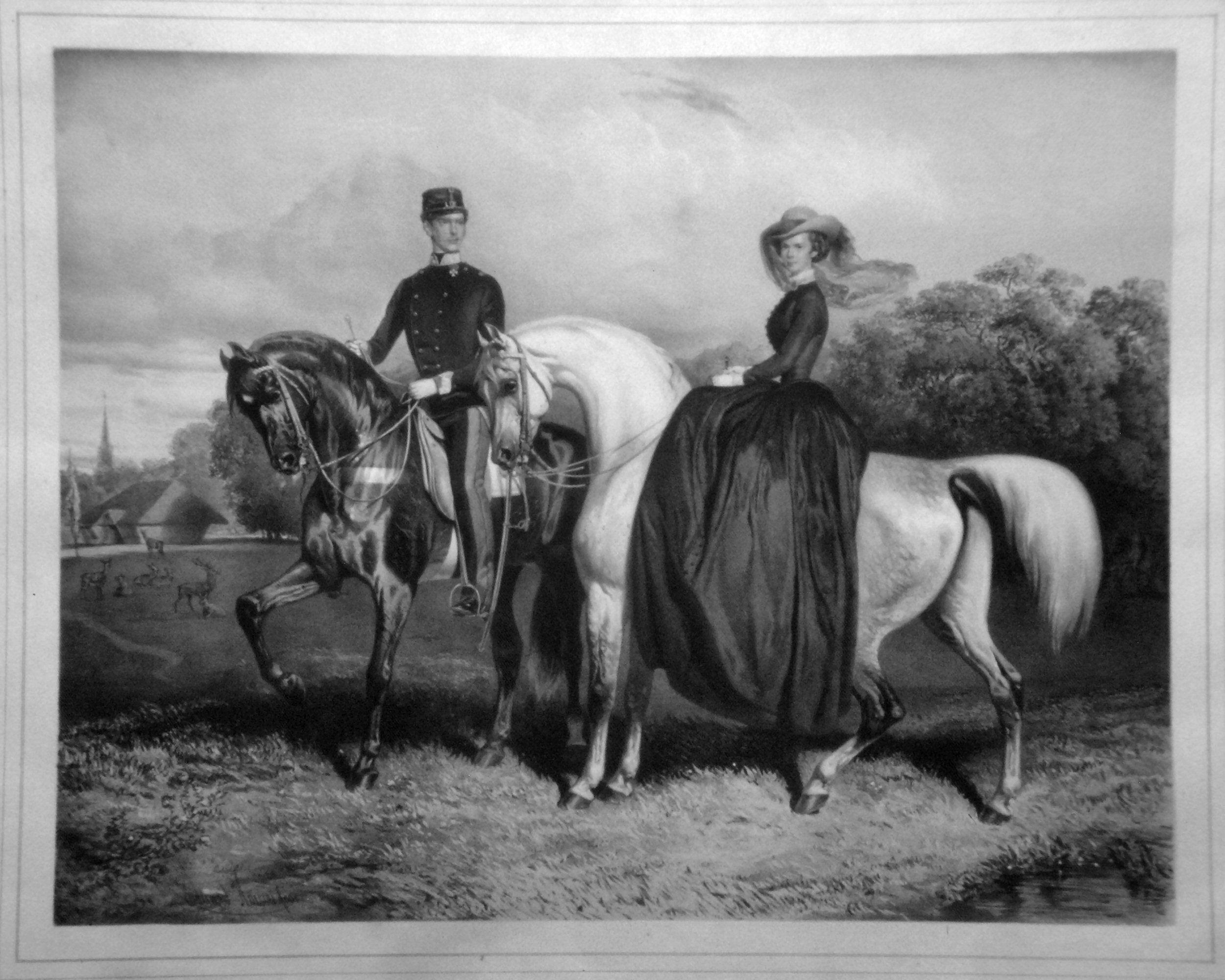
However, Elisabeth gave the villa a second chance. She had the building redesigned according to her own ideas and spent a few weeks here every year with Franz Joseph from 1886 onwards. The villa’s current name goes back to a sculpture of Hermes, the messenger of the gods, in the garden, which the empress had made – a symbol of travel and movement, fitting for the restless monarch.
The Hermesvilla was exceptionally modern for its time: Bathtubs and water closets were not installed until 1895, and the nearby Hermesstrasse was one of the first streets in Vienna to have electric lighting.
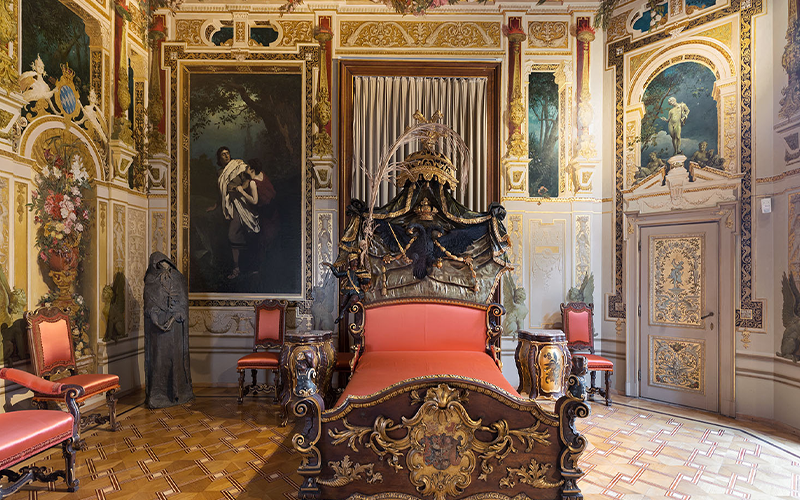
The empress’s bedroom is particularly famous, with murals by Hans Makart depicting scenes from Shakespeare’s A Midsummer Night’s Dream. A separate gym also bears witness to Elisabeth’s pronounced health and fitness awareness – an aspect that makes her appear far ahead of her time.
From imperial retreat to museum
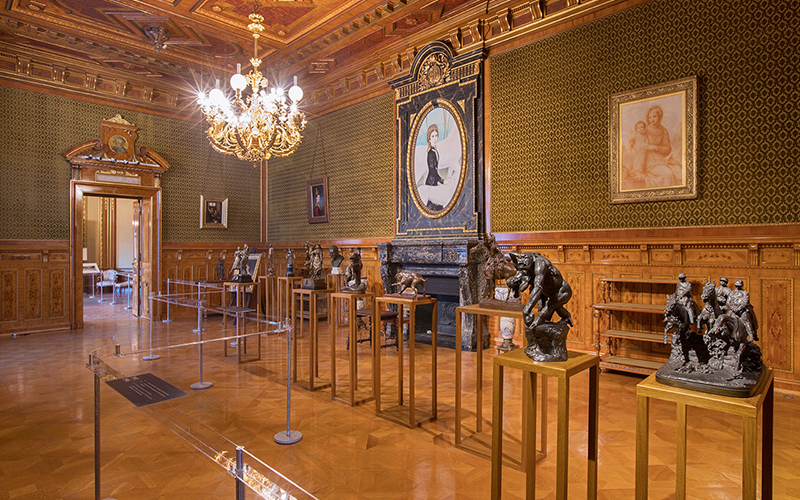
After the end of the monarchy, the Hermesvilla became the property of the City of Vienna. Today it serves as a museum and impresses with changing exhibitions about the Habsburg monarchy, the personality of Empress Elisabeth and the cultural history of the 19th century.
The extensive Lainzer Tiergarten also invites you to take long walks. A visit to the Hermesvilla is the ideal way to combine nature and relaxation – an excursion that combines history, architecture and Viennese lifestyle in a special way.
Sources:
https://magazin.wienmuseum.at/kaiserin-elisabeths-hermesvilla, (Opens in a new tab or window) 10.02.2026
https://hietzing.at/kunst-kultur/page-geschichte.php?id=241, (Opens in a new tab or window) 10.02.2026